How the NHS Works: Structure, Funding and Your Rights


The National Health Service is the publicly funded health system of the United Kingdom, and it is also one of the largest organisations in the world. Yet most people only ever meet one small part of it: their GP surgery, a hospital ward, or a pharmacist. This guide maps the whole system in plain English — what the NHS is, who runs it, how it is paid for, and the founding principles that still shape it — so that the rest of this site makes sense. It explains the organisation only. It gives no medical advice and describes no treatment.
The NHS in one paragraph
The NHS was founded on 5 July 1948 on three principles: it meets the needs of everyone, it is free at the point of delivery, and care is based on clinical need, not ability to pay. It is paid for mainly from general taxation and National Insurance contributions. In England it is organised by the Department of Health and Social Care, NHS England, Integrated Care Boards, NHS trusts, and GP practices — and Scotland, Wales, and Northern Ireland each run their own separate health system.
Four health services, not one
There is no single NHS for the whole United Kingdom. There are four separate systems: NHS England, NHS Scotland, NHS Wales, and Health and Social Care in Northern Ireland. Each has its own funding, its own charges, and its own waiting-time standards. That is why the figures on this site are for England unless a guide says otherwise, and why a charge that applies in England — for example, for a prescription — may not apply in Scotland, Wales, or Northern Ireland.
The four systems share the same founding idea, but they have drifted apart over the decades as health policy has been devolved. If you move between nations of the UK, or you live near a border and use services across it, the rules that apply to you can change. When a guide on this site gives a figure, check which nation it covers before you rely on it.
How the NHS began
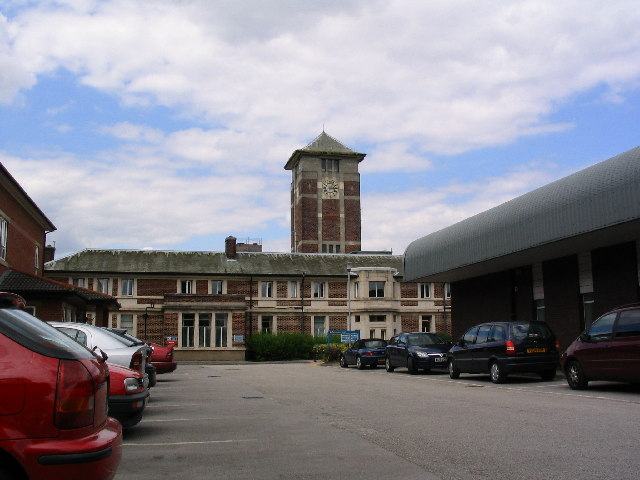
The NHS was founded on 5 July 1948, when the National Health Service Act 1946 came into force. It was launched by the Health Minister, Aneurin Bevan, at Park Hospital in Manchester — now Trafford General Hospital. Before 1948, most people paid for medical care themselves, through insurance, charity, or out of their own pocket, and many simply went without.
The founding principles were simple and radical: the service would meet the needs of everyone; it would be free at the point of delivery; and it would be based on clinical need, not ability to pay. Those principles are still written into the NHS Constitution for England, first published in 2009, which sets out seven principles and six core values, and patient rights including the right to complain. The Constitution is a statement of what patients can expect — it is not a medical document, and it does not promise any particular treatment.
Who runs the NHS in England
In England, the Department of Health and Social Care is the government department responsible for health policy and for the overall budget. NHS England is the national body that plans and oversees NHS services in England, and it allocates most of the day-to-day budget to local organisations.
Below the national level, Integrated Care Boards plan and buy health services for their local area, working with local councils and other partners. NHS trusts run hospitals, ambulance services, mental health services, and community services. GP practices — usually run as independent partnerships contracted to the NHS — provide most day-to-day primary care, and they are most people’s first point of contact with the system.
This structure is changing. In March 2025 the government announced that NHS England would be abolished and folded back into the Department of Health and Social Care, with legal abolition targeted for April 2027 if the Bill passes. The running costs of NHS England and the Integrated Care Boards are to be cut by around 50%. Until that change takes effect, the organisations above are the ones that run the service.
How the NHS is paid for
The NHS is funded mainly from general taxation and National Insurance contributions. Patient charges — for example, for prescriptions and dental treatment in England — exist, but they are small in the context of the whole budget: charges are under 1% of the Department of Health and Social Care budget in 2025/26.
The scale of the budget is hard to grasp. Total Department of Health and Social Care spending in 2025/26 is £217.4 billion, of which 93.9% (£204.1 billion) is day-to-day spending, and most of that day-to-day budget — £198 billion in 2025/26 — is allocated to NHS England. Staff costs are nearly 50% of day-to-day spending.
The previous year gives the same picture at a slightly smaller scale. NHS England’s total budget in 2024/25 was £187.4 billion, about 92% of the Department of Health and Social Care budget. The NHS workforce in England was around 1.38 million full-time equivalent staff as of March 2026, and staff costs were £89.9 billion in 2024/25 — just over 50% of the NHS budget. In other words, about half of what the NHS spends goes on the people who work in it.
Your rights as a patient
The NHS Constitution for England sets out what you can expect as a patient. Among its rights are the right to receive care, the right to be treated with dignity and respect, the right to be involved in decisions about your care, the right to accept or refuse treatment, and the right to complain without your care being affected. The Constitution also sets out responsibilities for patients, such as keeping appointments or giving as much notice as possible if you cannot attend.
The rights in the Constitution are the starting point for the rest of this site. The guide on registering with a GP explains how to join a practice; the guide on referrals explains the right to start consultant-led treatment within 18 weeks; and the guide on complaints explains what to do when something goes wrong, including the Patient Advice and Liaison Service and the Parliamentary and Health Service Ombudsman. If any of those rights matter to you, read the relevant guide — and check the current position on nhs.uk, because the rules are updated from time to time.
Sources: House of Lords Library, The NHS at 75; The King’s Fund, NHS budget in a nutshell (2 November 2026) and Key facts and figures about the NHS; NHS England; UK government announcements, March 2025.